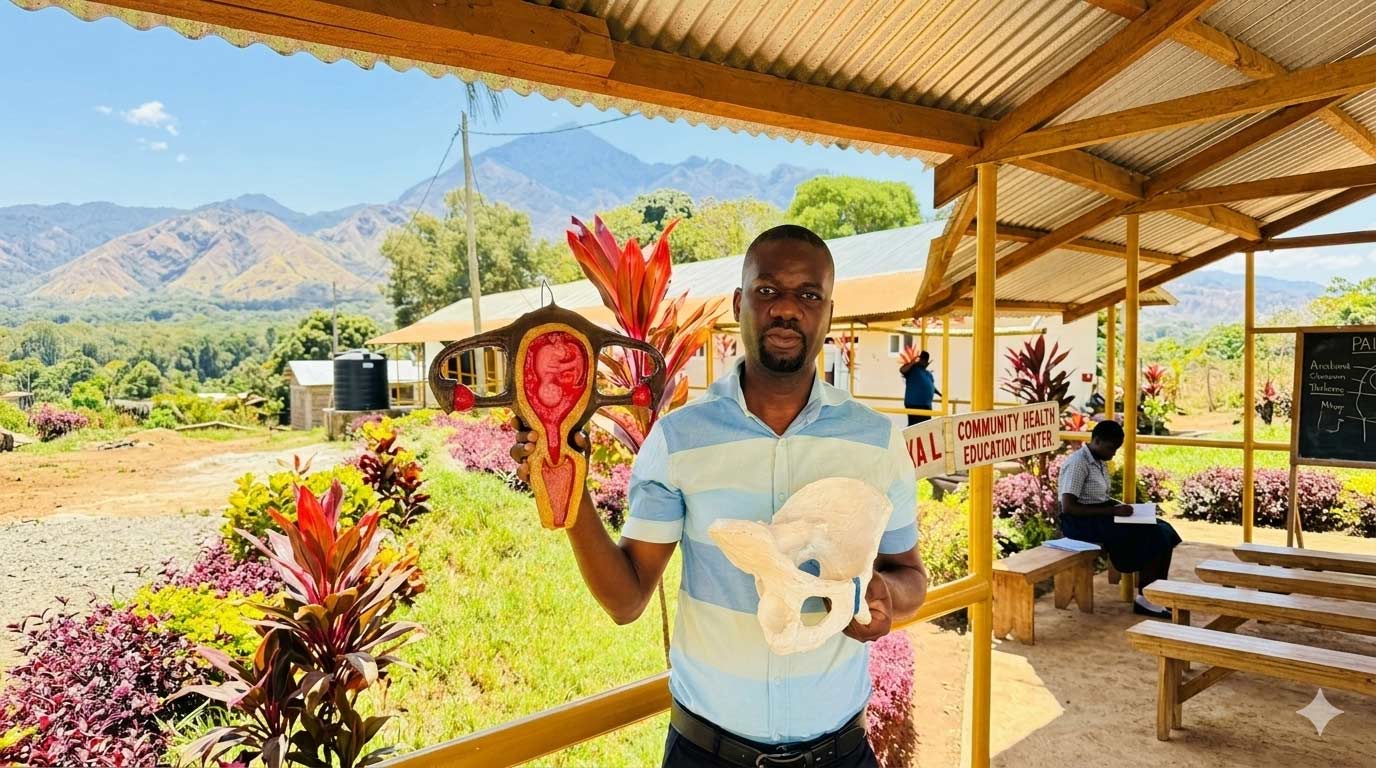
In the busy town of Kahama, in the Shinyanga region, there are a group of dedicated midwives who are making a big difference in the lives of mothers and babies. One of them is Jonas Musa Zeze, a male midwife at Kahama Hospital, whose story shows just how important Midwifery Emergency Skills Training (MEST) can be.
Jonas has been a midwife for over ten years and has helped deliver more than 1,000 babies. He is passionate about his work and always tries his best. But like many midwives, he found it difficult to deal with emergencies. One experience that still sticks with him is when he had to help with a delivery where the baby’s shoulder got stuck during birth. Even though he had a lot of experience, he felt unsure and scared. It was a moment when he realized that without the right knowledge, things could go terribly wrong.
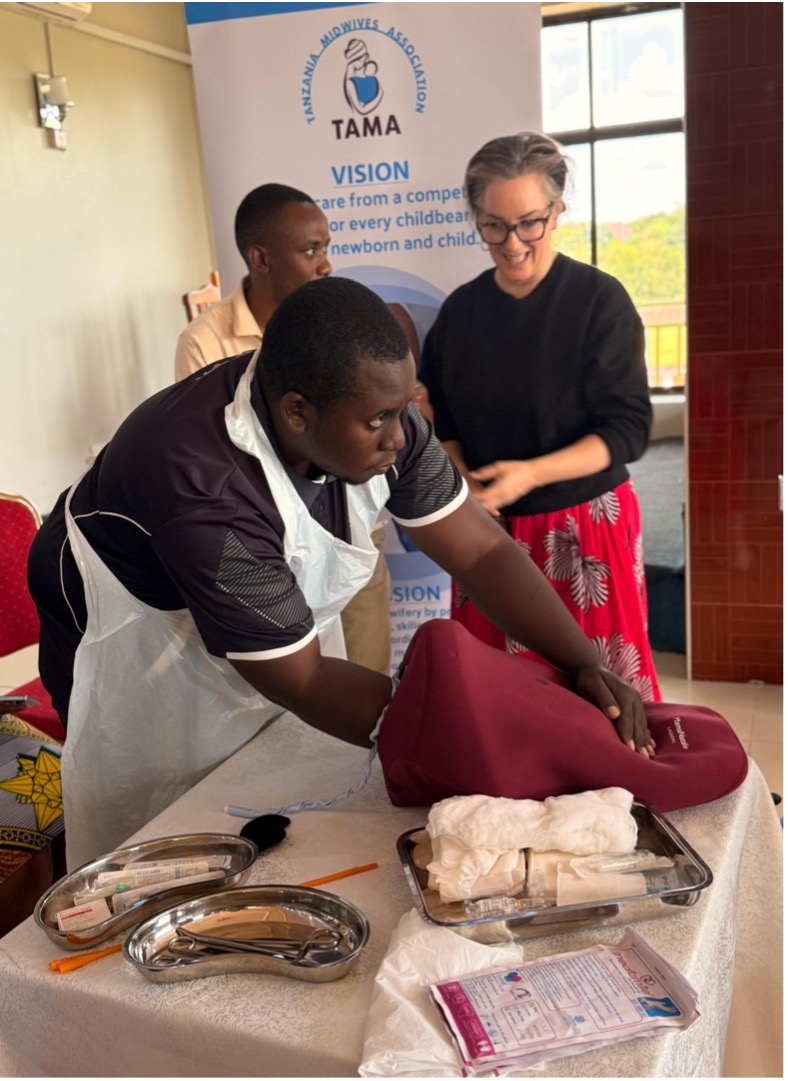
That’s when Jonas was enrolled in the MEST training program. The training wasn’t just about sitting in a classroom—it was hands-on and practical. It was designed to teach midwives like Jonas how to handle emergencies calmly and safely. He came back to work feeling more confident, ready to put everything he had learned into action.
Just a few days later, during his night shift, Jonas faced a real test. A third-time mother, who had already had two healthy babies, came in ready to deliver. Everything seemed normal at first, but as the labor continued, the baby’s shoulders became stuck. It was a tense moment, and Jonas felt a wave of fear. But he also remembered the techniques he had learned, like the McRoberts Maneuver, which he practiced during the training.
The Mickey Roberts Maneuver involves turning the mother’s body slightly and guiding the baby’s shoulder to help it move past the pelvic bone. Jonas took a deep breath and calmly told the mother to bend her knees toward her chest. He used the maneuver carefully, hoping it would work. To his great relief, the baby’s shoulders freed up, and soon, the baby was born healthy and crying. The mother, overwhelmed with happiness, hugged her baby and thanked Jonas for saving their lives.
For Jonas, this delivery wasn’t just another day at work. It was a reminder of how powerful the right training can be. He now believes that MEST training is not just nice to have—it’s something every midwife needs to handle emergencies like bleeding after birth or other life-threatening situations. Without this knowledge, the risks are too high.
Jonas is so thankful for the training that he now shares everything he’s learned with his colleagues at Kahama Hospital. He holds regular workshops and discussions, making sure that everyone is ready for any emergency. The midwives work together as a team, helping each other out and making sure they can save as many lives as possible.
Jonas’s story shows how much difference good training can make, not only for midwives but for entire communities. He always tells his colleagues, “We are here to save lives every day. For every mother we help, there’s a family that grows, a future that starts. We hold hope in our hands.”
And so, in Kahama, the impact of the MEST training continues to spread, helping more mothers and babies have safer births and better futures.