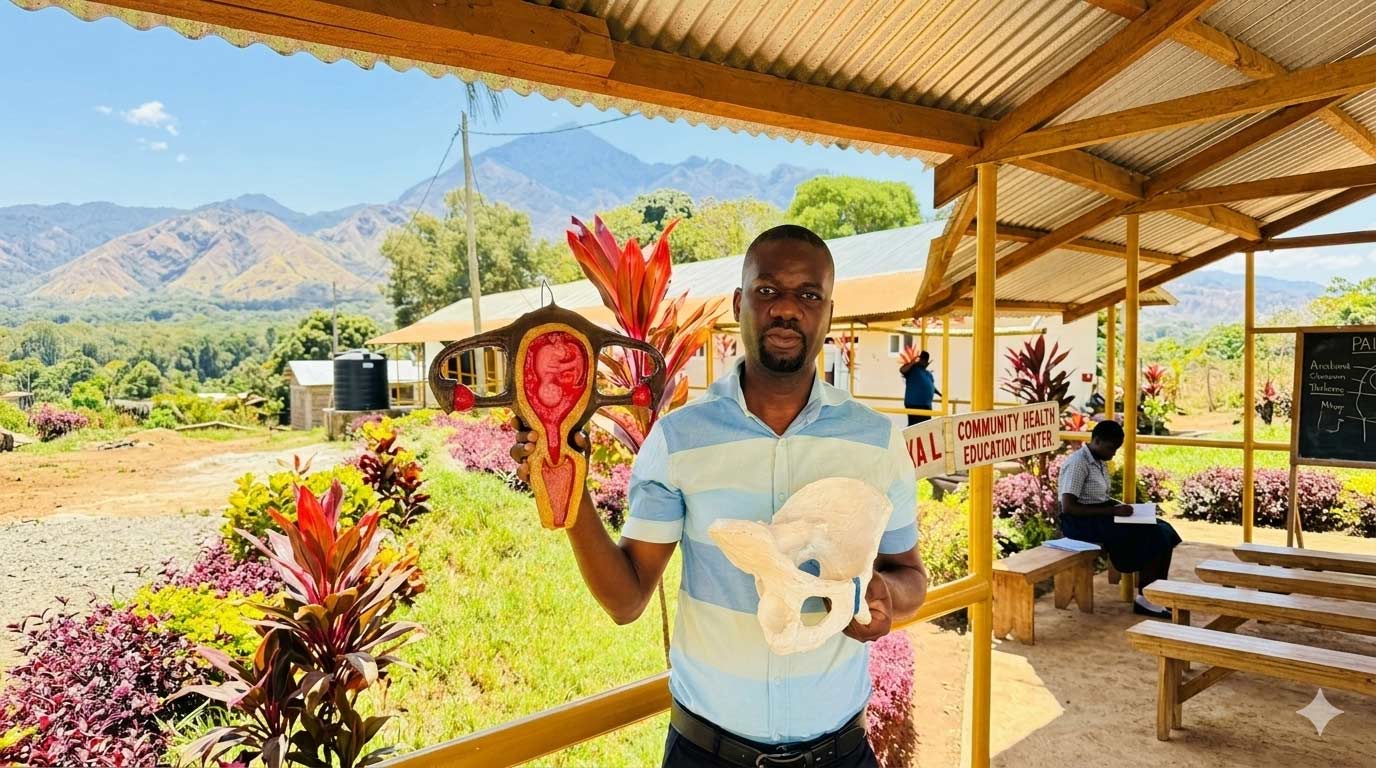

In the vast rural stretches of Kizazi Ward in Kigoma Region lies Nyarugusu Dispensary, a modest health facility surrounded by dusty footpaths and scattered homesteads. Far from Kigoma Town’s busy streets, this dispensary has become a sanctuary—a place where fear is replaced with knowledge, anxiety with comfort, and silence with hope. At the center of this quiet revolution stands a woman whose presence has changed the way young mothers experience care.
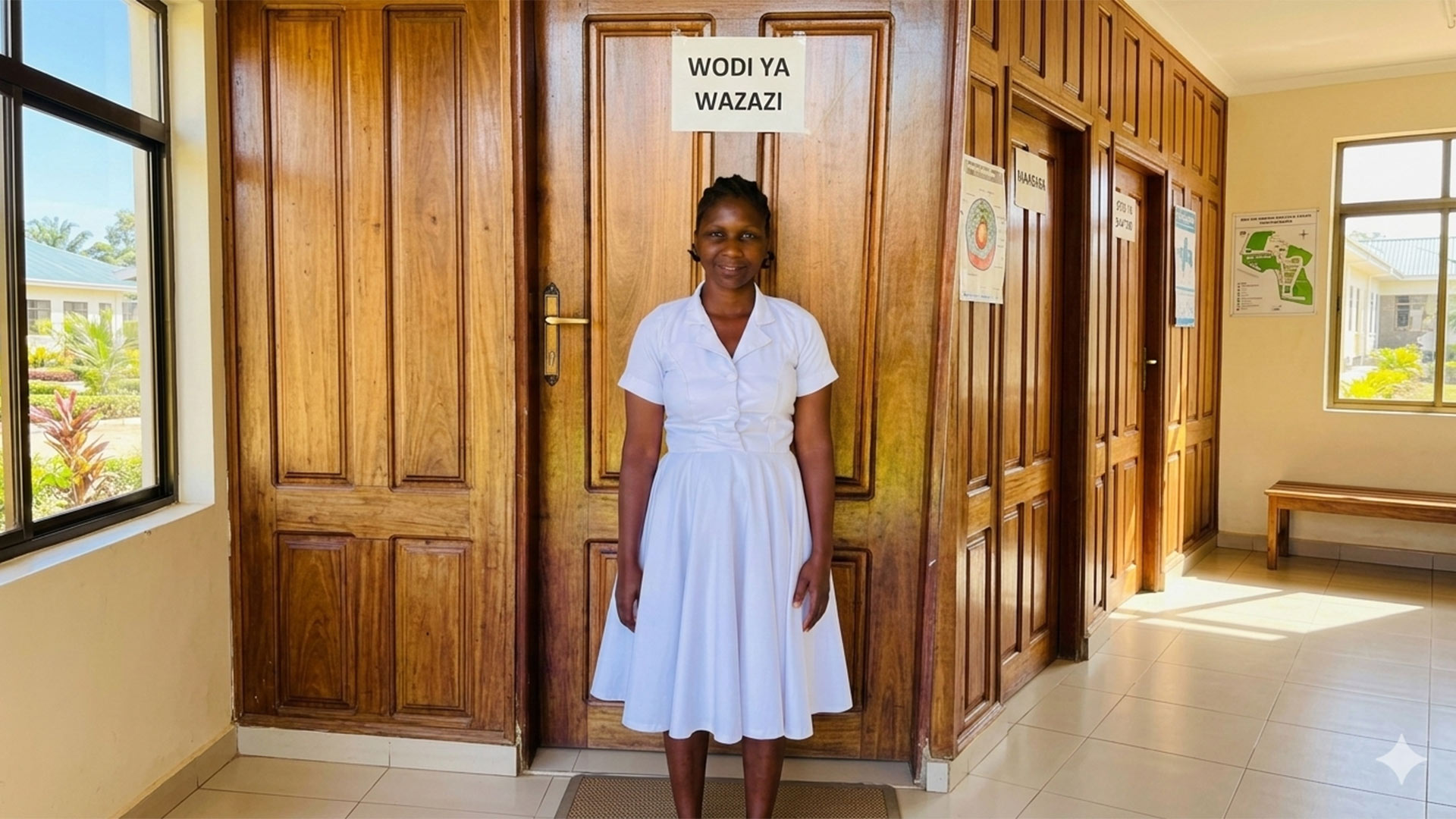
Her name is Kokubanza Bahati Beda, though everyone in Kizazi knows her simply as Midwife Koku.
A graduate of Kahama School of Nursing, Midwife Koku walks into the dispensary each morning with a mission woven deeply into her identity: to make motherhood a journey every young woman can walk with dignity. Her compassion is not an accessory—it is her practice. Her voice never demands attention, but it commands trust. Young mothers listen because she listens first.
A Safe Space in the Unlikeliest Place
During a routine visit by the Tanzania Midwives Association (TAMA), the team did not just find a health worker—they found a storyteller, a mentor, and a protector.
Among the stories shared was one that captured the essence of who Midwife Koku is:
A 16-year-old girl, trembling and seven months pregnant, arrived at the clinic for her first ever antenatal check. She had no clinic card, no previous visit, and no understanding of what to expect. Her future felt frighteningly uncertain.
But then she met Midwife Koku.
Without judgment, without haste, Midwife Koku welcomed her—not as a statistic, not as a burden, but as a young mother deserving respect. She explained each procedure, answered every question, and guided the girl through her first antenatal journey with patience and kindness. When the girl walked out, she left not only with a clinic card, but with something she had never possessed before—confidence.
That moment was not extraordinary for Midwife Koku.
It was simply another day of doing what she believes midwives were born to do.
More Than a Midwife
Midwife Koku is not just attending to pregnancies—she is reframing motherhood for first-time young mothers who often arrive burdened by fear, stigma, or misinformation. She:
- teaches them how to care for their bodies and babies,
- encourages them to attend clinics early and regularly,
- creates youth-friendly spaces where no question is foolish, no mother is judged, and no girl is unseen.
In a community where resources are scarce but dreams are abundant, her dedication has become a lifeline. Mothers return because she treats them as partners—not patients. They speak of her with gratitude. They trust her with their stories. They bring their friends because Koku has made the clinic a safe place to begin motherhood.
Quiet Impact, Lasting Change
There are no billboards celebrating Midwife Koku. No headlines. No cameras. Yet her work echoes in:
- the laughter of young mothers,
- the safe deliveries she facilitates,
- the knowledge she plants in girls who once walked in scared and silent.
She is:
- a midwife
- a teacher
- a counselor
- a sanctuary
Kizazi Ward may be remote, but heroes like her ensure it is never left behind.
Why Her Story Matters
The world often celebrates innovation, leadership, and transformation in boardrooms and conferences. But sometimes, the most profound change happens in a small dispensary, in a quiet room, where one midwife chooses compassion over convenience and service over recognition.
This is Midwife Koku.
Kizazi’s quiet force.
A guardian of safe motherhood.
An unsung hero—until today.
Her story came to light during a community follow-up visit conducted by the Tanzania Midwives Association (TAMA) with generous financial support from UNFPA. Through this collaboration, voices like Midwife Koku’s—once hidden—are now being amplified, strengthening efforts to ensure that no young mother walks the journey of motherhood alone.
Because every young mother deserves a Koku.
And every Koku deserves to be seen.