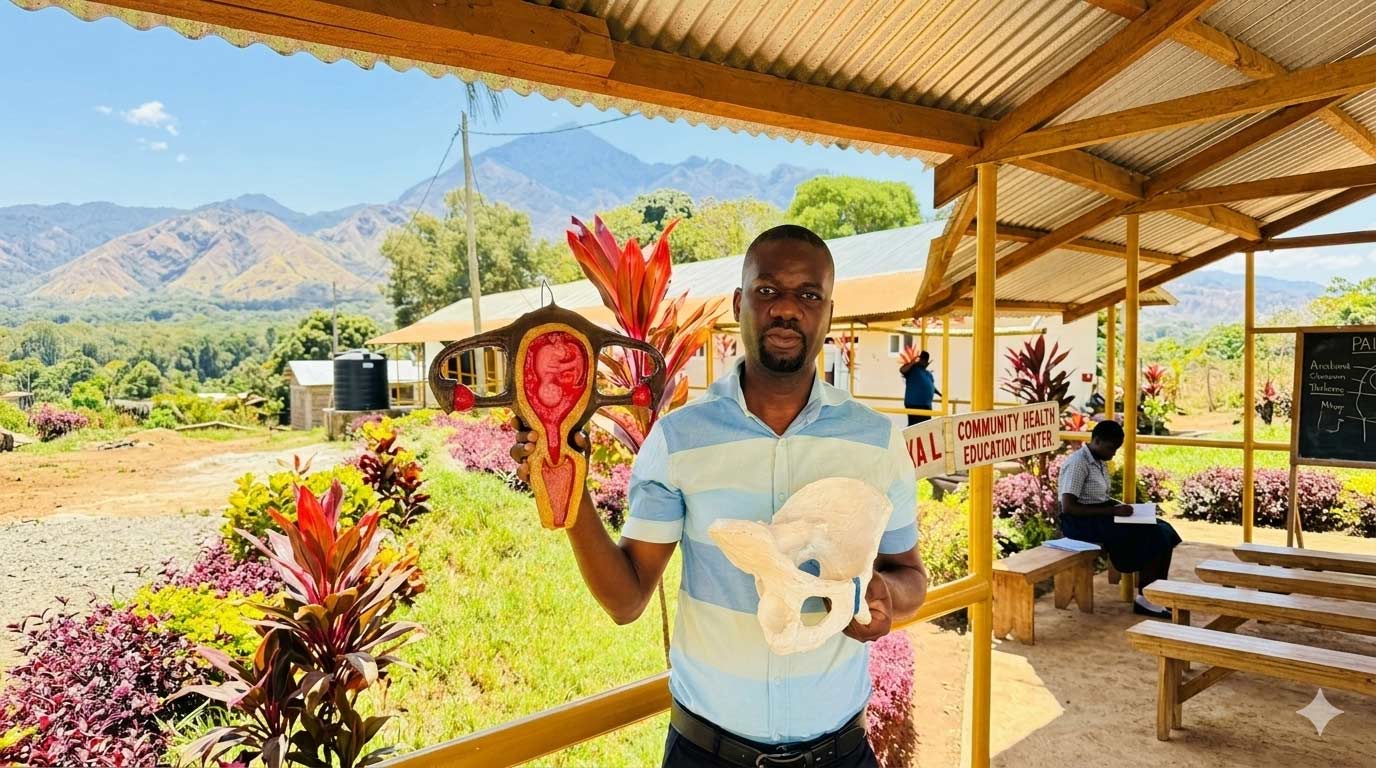
Benjamin Paul is a midwife with a deep passion for his work, serving at Kivule district hospital in Dar es Salaam. For years, he has been at the heart of his community, offering care and support to countless mothers and newborns. Benjamin’s journey into midwifery has been shaped not just by the joys of delivering babies, but by the everyday challenges of ensuring the health and safety of both mothers and their babies.
When Benjamin first heard about the Midwifery Emergency Skills Training (MEST), he saw it as an opportunity to grow and sharpen his skills. “I knew that as a midwife, I could always improve and be better prepared,” he says. “MEST was exactly what I needed to build my confidence and become more effective in emergencies.”
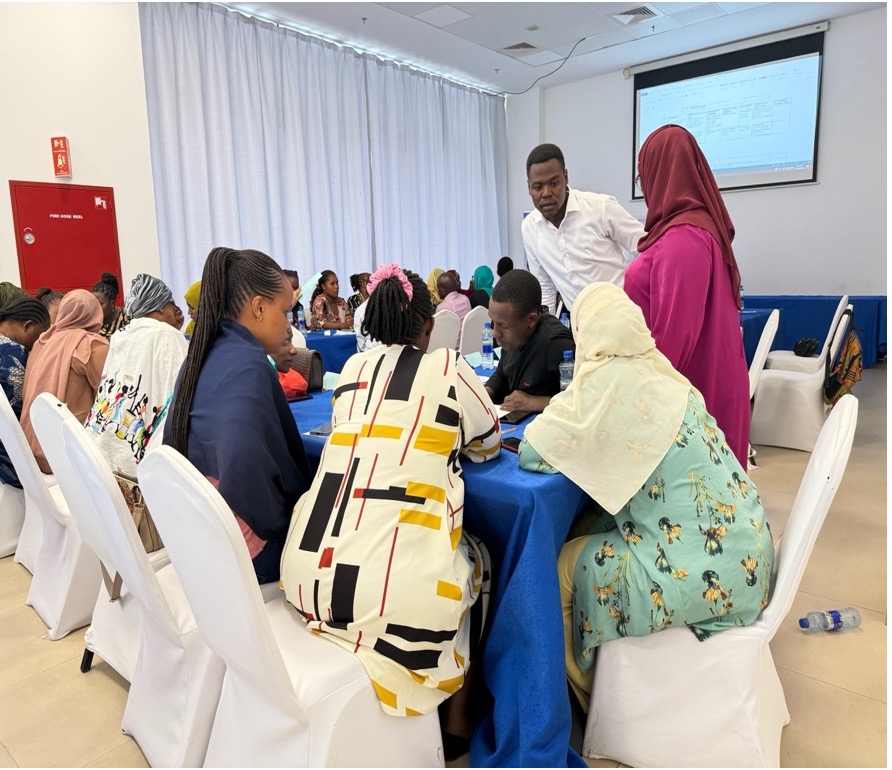
The training was transformative for Benjamin. He was excited to learn from the local trainers, who shared valuable insights tailored to the Tanzanian healthcare context. But what truly stood out to him was the opportunity to learn from the Canadian midwives, whose international experience brought a fresh perspective. “The combination of local trainers and Canadian midwives made the training so impactful,” Benjamin reflects. “The Canadian midwives brought a wealth of knowledge from their own experiences, and I was able to see how midwifery practices from different parts of the world can be applied to our work here in Tanzania.”
Through MEST, Benjamin learned not only how to handle high-risk deliveries with more confidence but also how to manage critical situations with a clear and calm approach. “What I learned from the trainers, both local and Canadian, was life-changing,” he explains. “The practical skills and techniques have made me more confident, and I feel better prepared to handle any challenges that come my way.”
Benjamin now feels more equipped to provide the best possible care for the mothers and newborns he serves. He has shared his newfound knowledge with his colleagues at Kivule hospital emphasizing the importance of continuous learning and preparation. “MEST has given me the tools I need to save lives,” Benjamin says. “And I want to make sure that other midwives get the same opportunity to learn these critical skills.”
Benjamin believes that the MEST training should be scaled up and made available to midwives across the country. “We need to spread this training so that midwives everywhere can be equipped with the skills to save more lives,” he urges. “I am grateful for TAMA and the Canadian midwives who helped make this training possible. It’s a game-changer.”
For Benjamin, midwifery is not just a job—it’s a calling. Thanks to MEST, he now feels even more empowered to face the challenges of his profession and make a difference in the lives of mothers and babies. “Every birth is a miracle, and every life saved is a victory,” he concludes. “MEST is the key to making those victories happen every day.”
Benjamin’s story is a powerful reminder of how learning and collaboration, both local and global, can transform the lives of midwives and, ultimately, the lives of the mothers and babies they care for.