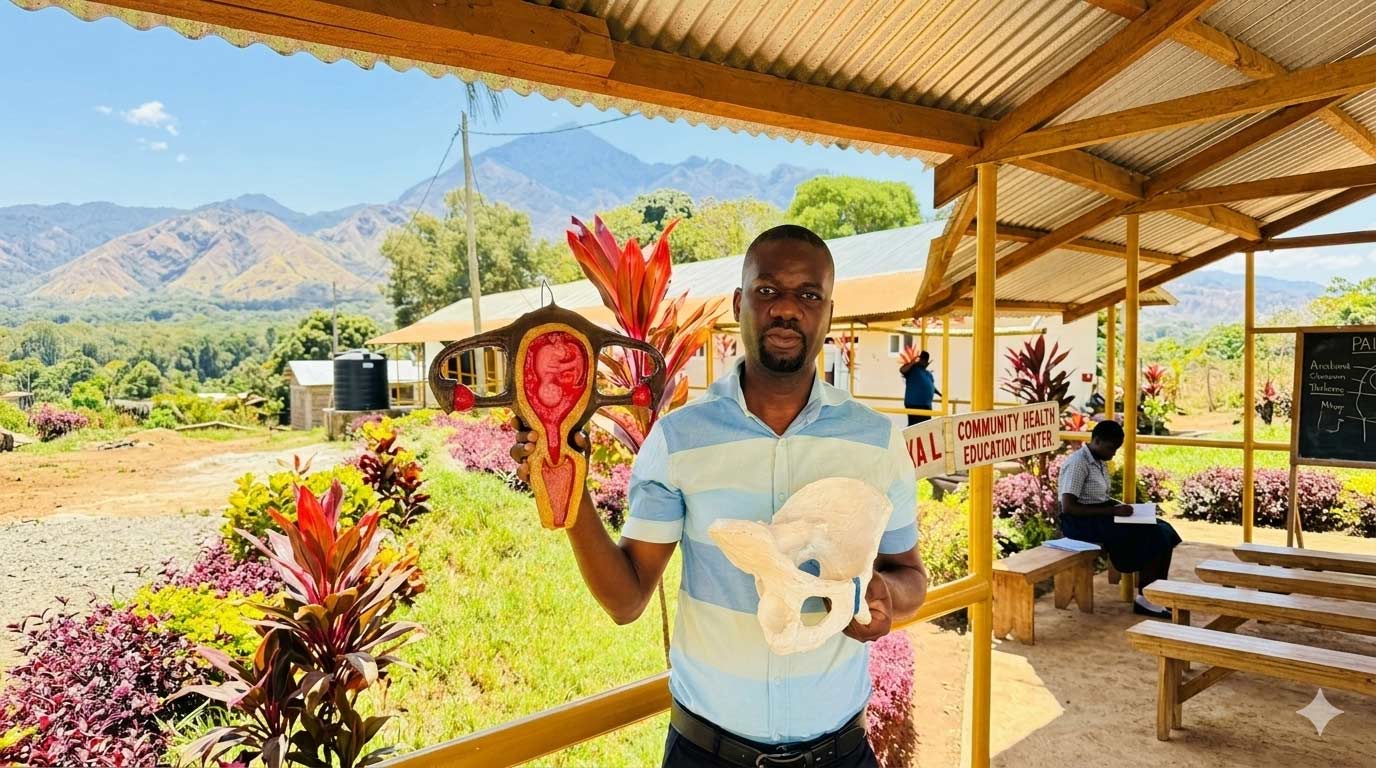

At Kilombero Sugar Hospital, amid the hum of patients, learning, and care, stands a quiet visionary whose hands have shaped far more than medical tools—he has shaped possibility. His name is Midwife Ling’anda Thabit Ramadhani, a Patron, educator, and innovator leading a dedicated team of 29 nurses and midwives. Yet his true legacy extends far beyond the wards he oversees.
Ling’anda’s story began years earlier at Edgar Maranta School of Nursing, where he pursued his Ordinary Diploma in Nursing and Midwifery. From the very beginning, his educators saw in him more than a student. He asked questions others overlooked, imagined solutions where resources fell short, and carried compassion not as a skill, but as a calling.
Where many saw barriers, Ling’anda saw blueprints.
 A Revolution Born from Scarcity
In 2023, Tanzania faced a challenge familiar to many low-resource settings: a critical shortage of training models. These models—pelvises, reproductive systems, and anatomical replicas—are essential for developing practical midwifery and nursing competencies. Without them, learning becomes theoretical, distant, and incomplete.
For Ling’anda, this was unacceptable.
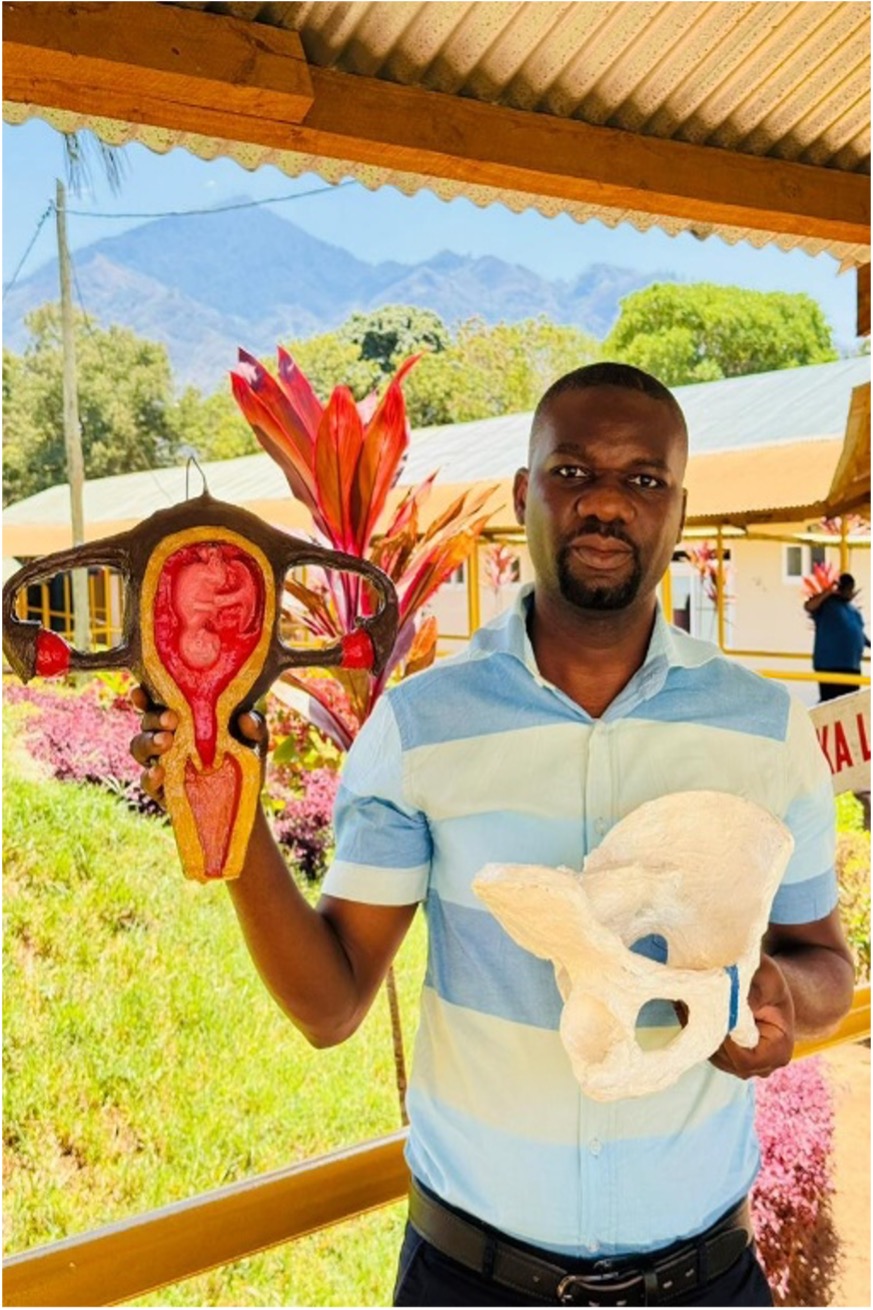
He turned to a gift he rarely mentioned—handcrafting. With humble materials, meticulous patience, and astonishing skill, he began shaping what others purchased overseas: realistic, anatomically-accurate teaching models designed specifically for Tanzanian learners.
He molded pelvises, the uterus, male and female reproductive systems, and other complex structures—each model not just a teaching tool, but a declaration:
“When passion leads, resources follow.”
Word spread quickly. Soon, institutions requested his creations. St. Francis Referral Hospital and others integrated his models into their skills labs, transforming the way future midwives and nurses learn. Lecturers reported heightened engagement. Students gained confidence. Education became tactile, real, and empowering.
A Champion for Midwifery Education
What distinguishes Ling’anda is not merely his innovation—it is his conviction.
He believes that every midwife should learn with dignity, every student deserves access to tools that translate knowledge into skill, and every mother deserves care guided by well-trained hands. His work embodies a simple truth: innovation flourishes where commitment meets need.
Through the handcrafted models he produces, Ling’anda has strengthened competencies, inspired educators, and improved the learning environment for countless midwives—each of whom will go on to serve families, communities, and futures.
His impact is not temporary. It lives in every safe delivery, every confident student, and every facility now equipped with tools born from Tanzanian hands.
Advocacy in Action: The Power Behind the Story
This remarkable innovation was not discovered by chance. It was identified and documented during branch visits made possible through the International Confederation of Midwives (ICM), supported by the Advocacy Incubator.
Through this support, ICM enables national midwives’ associations—including those in Tanzania—to uncover, amplify, and celebrate local leaders like Ling’anda, whose grassroots innovations strengthen the global midwifery movement. Their commitment ensures that midwives are seen, valued, and supported—not just as caregivers, but as architects of change.
A Legacy Crafted, A Future Inspired
In every model he shapes, Ling’anda molds more than plastic and material—he molds futures. He embodies the spirit of midwifery: resourceful, resilient, and relentlessly focused on the well-being of women, newborns, and families.
His journey reminds us that the most profound innovations often emerge not from abundance, but from a refusal to accept limitation.
And as Tanzania’s midwives continue to rise, so does the legacy of a man who proved that even in scarcity, transformation can be handmade.